

Many of the coaching conversations I’m having right now are not about how to be more influential, but how to stay sane and effective while reporting to someone whose behaviour feels fundamentally unsafe or toxic. In one recent engagement, a leader described their CEO as a “sociopath”. Whether or not that label is clinically accurate, their experience of manipulation, volatility and lack of empathy was very real, and it echoes what research tells us about toxic leadership undermining wellbeing, engagement and performance.
This CEO was highly skilled at curating their own reputation upwards, carefully managing the board and select senior peers, while behaving very differently with those who reported directly to them. That split is common; leaders can appear charming and values-driven to powerful stakeholders while simultaneously eroding trust and safety in their immediate teams which has a significant impact on culture. My client had tried the usual playbook: adapting their style, over-delivering, giving feedback. Nothing shifted. At some point, we had to name the hard truth: you are unlikely to change this person.
The mindset then stops being “How do I fix them?” and becomes “How do I protect myself, maximise the impact I can have, and create options for what comes next?” This is where the sphere of influence model is useful: it reminds us to stop pouring energy into what we can’t change, and re-focus on what we can directly control or realistically influence.
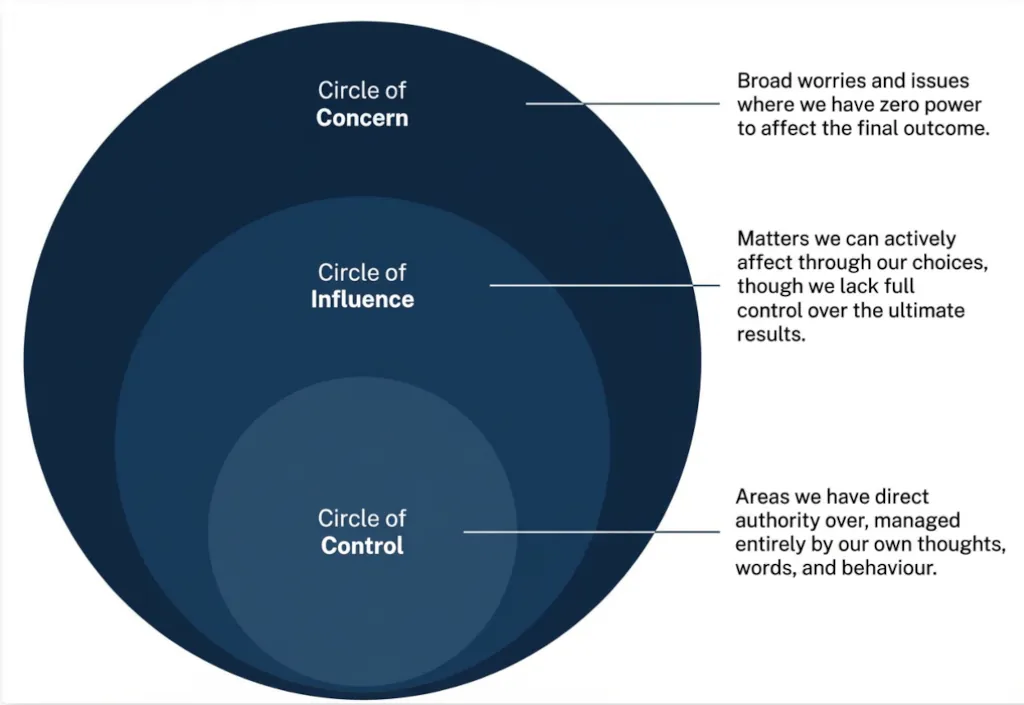
At the centre of the three spheres are things you can directly control i.e. your behaviour, boundaries and how you respond. Around that sit the things you can influence – your team’s experience, processes, how information flows. Outside that are the things you’re concerned about but can’t change alone – the CEO’s personality, board dynamics, macro pressures.
In toxic dynamics, the senior leader often sits mostly in your outer sphere of concern. You might occasionally influence how they react in a meeting, but you are unlikely to reshape their character or deep patterns of behaviour…. they are ‘uncoachable!’.
Continuing to try, hoping that the right mix of feedback, empathy and performance will “fix” them is a fast track to burnout and self-doubt. Instead, the invitation is to consciously withdraw effort from trying to change them and reinvest it into what you control (your standards, boundaries, self-care), what you can influence (your team, your part of the system, how you communicate), and what you will accept as outside your control and stop personalising.
Marshall Goldsmith’s “What Got You Here Won’t Get You There” is relevant because it highlights how unexamined habits become more damaging as power grows. Behaviours like always needing to win, adding too much value to every conversation, claiming credit, or punishing the messenger might have gone unchecked on the way up – but at CEO level, they can be truly toxic.
When these behaviours are combined with intense external reputation management – carefully managing impressions with the board and influential stakeholders – the people closest to the leader often feel gaslit. Outwardly, the CEO looks successful and values-driven; inwardly, the team is walking on eggshells. You didn’t cause those habits, and you can’t “fix” them. The question is: how do you protect yourself and still do work you’re proud of?
You might not be able to change your CEO, but you can get very deliberate about how you operate around them. The prompts below are designed to help you protect your energy, reduce avoidable friction and prepare for better decisions down the track.
- Level of authority – What decisions are you empowered to make independently, and where do you need approval or oversight? Where are you currently acting on assumptions instead of clear agreements? The more ambiguity here, the more space there is for blame, rework and anxiety; documenting your working assumptions gives you something concrete to test or clarify.
- Scope of responsibility – Are expectations around your outcomes, deliverables and boundaries clear, or are you constantly discovering “hidden” responsibilities after the fact? Map what you believe you’re responsible for and notice where the leader’s behaviour or feedback suggests a different view. Even if you can’t close every gap, seeing the pattern helps you shift from “I’m failing” to “the role is under-defined.”
- Access and communication – What cadence and channels of communication with the CEO or board would help you stay aligned without unnecessary stress or micromanagement? Sometimes a short, regular update can reduce reactive fire drills; sometimes it’s about deciding which topics you will only discuss in structured forums rather than in the heat of the moment.
- Support and escalation – Who can you go to for advice, perspective and, if needed, escalation? This might be trusted peers, a sponsor on the board, a mentor, or an external coach. Clarify the difference between issues you will simply sense‑check, issues you’ll quietly document, and issues you would escalate if they cross legal, ethical or psychosocial lines.
- Personal wellbeing boundaries – What practices and limits will help you protect your mental and emotional bandwidth while operating in a challenging environment? Think about boundaries around after-hours contact, breaks you treat as meetings with yourself, rules about not responding instantly to inflammatory messages, or commitments to exercise, therapy or coaching. You may not control the culture, but you can control how much of yourself you allow it to consume.
- Metrics for success (your definition) – In toxic settings, organisational goal posts can move overnight. Define what “good performance” looks like for this season on your terms: the results you’ll aim for, the standards you’ll hold, and the behaviours you’ll be proud of regardless of how you’re treated. This becomes your anchor when feedback is inconsistent, absent or weaponised.
These reflections don’t remove a toxic leader, but they do help you reclaim some agency, reduce self‑blame and make more conscious choices about how you show up.
Running a parallel exit plan
An important part of protecting yourself is acknowledging that staying forever might not be the right answer. The more experienced you become in your career, the less willing you are to tolerate chronic disrespect and toxicity, you’ve seen the long‑term cost on health, confidence and career. At the same time, everyone has real‑world constraints (mortgages, school fees, bills, caring responsibilities) that shape how quickly and freely they can move. Research shows toxic leadership significantly increases people’s intentions to leave, with culture acting as the bridge between leadership behaviour and whether people stay or go.
That’s where a parallel exit plan comes in. You don’t have to decide today whether you’re staying or going, but you can quietly build options so that you’re not trapped if the situation deteriorates or simply remains unsustainable.
A parallel plan might include:
- Updating your CV and LinkedIn profile to reflect current achievements.
- Re-activating your network with low‑risk conversations about the kind of roles or cultures you’d consider next.
- Identifying the minimum conditions under which you would stay (e.g. specific role clarity, behaviour changes, support) and the red lines that would trigger a decision to leave.
- Keeping a factual record of key incidents, in case you need it later for reference, advice, or HR/legal support.
The mindset shift is: “I will make the most of this role while I’m here, learn what I can, and protect my health, but I am not bound to this environment indefinitely.” Holding both truths at once – making the most of the situation and building your exit options is often what makes a difficult season psychologically survivable.
Why this all comes back to leadership and culture
From an organisational perspective, this isn’t just about individual coping strategies; it’s a warning signal about leadership and culture. Toxic or ego-driven leadership styles are consistently linked to higher turnover intentions, lower engagement and poorer performance, and culture is often the channel through which that damage is done. People don’t just leave for better salaries or logos; they leave environments where ego, fear and reputation-management trump respect, learning and psychological safety.
They stay where leadership and culture support them to do their best work without sacrificing their health. For boards and CEOs, investing in self-aware, accountable leadership and a healthy culture isn’t “soft stuff”, it’s one of the most powerful retention strategies you have. The uncomfortable reality is that what gets some leaders to the top unchecked habits, impression management, goal-obsession is often exactly what will drive good people away if it’s never addressed.
If you’re an executive or senior leader currently navigating a toxic or deeply misaligned senior relationship, you don’t have to choose between “put up with it forever” and “blow everything up tomorrow.” There is usually more room to protect yourself – and more options – than it feels from the inside. Working with an experienced coach or advisor can help you apply these ideas in your context and decide, with a clear head, what comes next.